

5 Steps to designing your outdoor living space
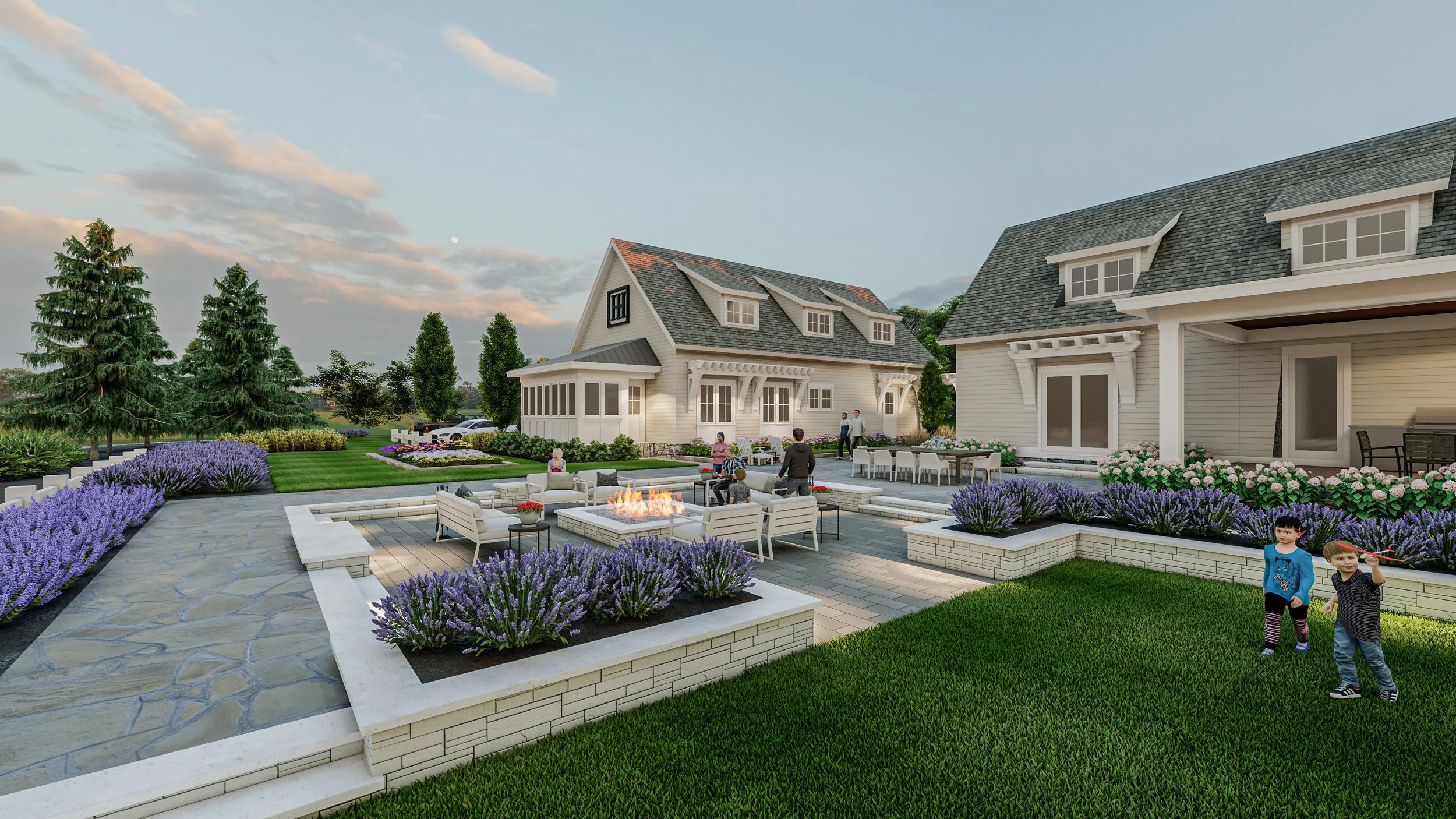
Why Most Outdoor Spaces Get Built Backwards
Most outdoor spaces start with the wrong decision. Someone sees a beautiful fire pit online. They fall in love with it. They build it.
Then they realize nobody actually sits there. It’s in the wrong spot. It faces the neighbor’s fence. It gets blasted by sun during the hours they’d actually want to use it. What looked great in a photo doesn’t work in real life.
We see this all the time. Homeowners start with features instead of a plan. They choose materials before understanding flow. They focus on inspiration images instead of how they actually live.
The result?
Outdoor spaces that photograph well but rarely get used. Beautiful hardscapes that feel awkward to move through. Expensive features that sit empty most of the year.
Designing an outdoor living space that truly enhances your life takes more than inspiration. It takes intention. At Robert Thomas Landscape Environments, our process starts long before we talk about fire pits, patios, or pergolas. We design outdoor spaces around how you live, how your property functions, and how everything works together as a complete environment.
This guide walks you through the same process we use to design outdoor spaces people actually love—not just admire from inside the house. Let’s start with the step most people skip entirely.
Step 1: Start With How You’ll Use the Space
Before you look at furniture. Before you scroll Pinterest. Before you fall in love with a feature. Ask yourself one simple question:
How do you actually want to live outside?
This is where most outdoor projects go wrong. We’ve seen homeowners invest $50,000+ in elaborate outdoor kitchens only to realize they’re not outdoor cooks. They’d rather be sitting around a fire with a drink at the end of the day. That’s an expensive lesson.
Your outdoor space should be designed for your real life—not the life you think you should have or the one you saw in a magazine.
Design for Your Lifestyle, Not Trends
That dramatic stone fireplace might look incredible online. But if you go to bed early or hate the smell of smoke, you’re not going to use it.
Before we draw a single line, we ask our clients direct questions:
Do you actually cook outside, or do you just like the idea of it?
When you picture yourself outside, are you entertaining—or relaxing alone?
How often do you host? And is that six people or twenty-six?
Do you need space for kids or pets?
Be honest: do you want a garden you’ll maintain, or something that mostly takes care of itself?
These aren’t easy questions, but they prevent you from building a space that doesn’t fit your life.
Think in Zones
Your home has rooms with purpose. Your outdoor space should too. We design outdoor environments using functional zones that work together naturally:
Cooking zone: grill, outdoor kitchen, bar, pizza oven
Dining zone: table, seating, and lighting for meals
Lounge zone: sofas, fire feature, or covered seating
Activity zone: pool, spa, lawn games, or play space
You don’t need a massive yard to do this well. Smart zoning is about placement, not size. Dining areas near the kitchen door. Lounge areas set away from traffic paths. Activity spaces where noise and movement won’t disrupt relaxation. That’s intentional design.
A Designer’s Pro Tip
Before committing to anything, spend time in your yard. Notice where you naturally gravitate with your morning coffee. Pay attention to areas you avoid—too sunny, too shaded, poor drainage, neighbor noise. These observations matter.
Also consider when you’re outside. Morning use, evening gatherings, or weekend afternoons all require different sun, shade, and lighting strategies. When these patterns guide the design, homeowners end up with spaces they actually use—not just spaces that look good on day one.
Step 2: Design for Flow and Function
A beautiful outdoor space that’s awkward to move through won’t get used. We’ve seen stunning patios where guests block walkways, grills are placed purely for looks, and carrying hot food feels like an obstacle course. That’s not good design. At Robert Thomas Landscape Environments, this is where landscape design meets architecture.
Think Like an Architect—Outside
Good outdoor spaces are planned with intention:
How do people move from the house to each zone?
What’s the first thing you see when you step outside?
Do spaces connect naturally or feel disjointed?
Just like inside your home, outdoor spaces need clear paths, strong focal points, and seamless transitions.
Connect Indoors and Outdoors
We design outdoor spaces as extensions of the home, not separate projects. Stand at your kitchen window. What do you see? A welcoming dining space—or the back of a grill?
Materials matter too. Warm brick homes don’t pair well with cold gray concrete. Your outdoor materials should complement the character of your house, not fight it.
Transitions are critical. If moving outside feels awkward—steep steps, narrow doors, poor grading—people won’t naturally use the space. We design these connections so they feel effortless.
The Details That Make or Break a Space
Some things aren’t exciting, but they matter:
Drainage: Water should move away from gathering areas, not pool where people walk or sit.
Walkways: Wide enough, well-lit, and comfortable for all ages.
Sightlines: Seating should face something worth looking at—landscaping, fire features, water, or open sky.
These details are what separate a nice yard from a professionally designed landscape.
Design for Real People, Not Just Plans
Outdoor spaces need room to breathe.
Dining chairs need at least 3 feet of clearance.
Walkways should be 4 feet wide for comfortable passing.
Seating areas shouldn’t feel cramped or shoved into corners.
We often follow a simple rule: most zones work best with about 10 feet of usable space in at least one direction.
And we always think long-term. Wider paths, gentle grade changes, good lighting—these features benefit everyone and become essential over time.
Step 3: Choose Materials That Last
Materials should do three things:
Complement your home
Withstand Michigan’s climate
Match your tolerance for maintenance
Choosing materials based on photos alone is how outdoor spaces age poorly.
Build From the Ground Up
What’s underneath matters more than what you see. Proper base preparation, drainage, and compaction are what keep patios from sinking, shifting, or cracking years down the road. Patios, retaining walls, decking, and overhead structures all require thoughtful engineering—not shortcuts.
What Actually Works in Michigan
Freeze-thaw cycles, sun exposure, and heavy rain eliminate certain materials quickly.
Natural stone & high-quality pavers: Durable, repairable, and long-lasting
Composite decking: Higher upfront cost, minimal maintenance
Wood decking: Beautiful, but requires regular upkeep
Stamped concrete: Looks good initially, but cracking is inevitable
Cheap materials often cost more in the long run. We’ve replaced plenty of projects where cutting corners led to regret.
Create a Cohesive Look
Great outdoor spaces feel intentional. That comes from:
Pulling colors from the home
Repeating key materials
Mixing textures instead of piling on colors
Limiting your material palette makes everything feel more refined—and more expensive.
Step 4: Layer Lighting and Landscaping
Without lighting and landscaping, even the best hardscape feels unfinished.
Lighting That Feels Natural
Good lighting isn’t noticed—it’s felt. We layer:
Path and safety lighting
Accent lighting for trees and features
Ambient lighting for gathering areas
Task lighting where function demands it
The goal is warmth and usability, not glare.
Landscaping Brings It All to Life
Plants soften edges, add movement, and evolve with the seasons.
We design landscapes with:
Layered heights for depth
Four-season interest
A balance of beauty and low maintenance
Because we understand long-term care, we design plantings that thrive—not struggle—in local conditions.
Step 5: Make It Personal
This is where a great design becomes your space. Not through accessories—but through intention.
Reflect How You Live
Whether you love entertaining, quiet evenings, gardening, or extending the season, your outdoor space should support those priorities. Customization ensures the space gets used, not just admired.
Design for Change
Life evolves. Good design anticipates that. Flexible layouts, adaptable zones, accessible pathways, and durable materials allow your outdoor environment to grow with you—not become obsolete.
Ready to Design an Outdoor Space You’ll Actually Use?
Great outdoor spaces don’t happen by accident. They’re the result of thoughtful planning, experienced design, and a deep understanding of how people actually live outside.
At Robert Thomas Landscape Environments, we design outdoor spaces that work—today, tomorrow, and years from now. If you’re ready to stop dreaming and start designing, we’re ready to help. Schedule a consultation and let’s create an outdoor space you’ll truly live in.
