

Landscape Lighting: The Most Overlooked Part of Outdoor Living Design
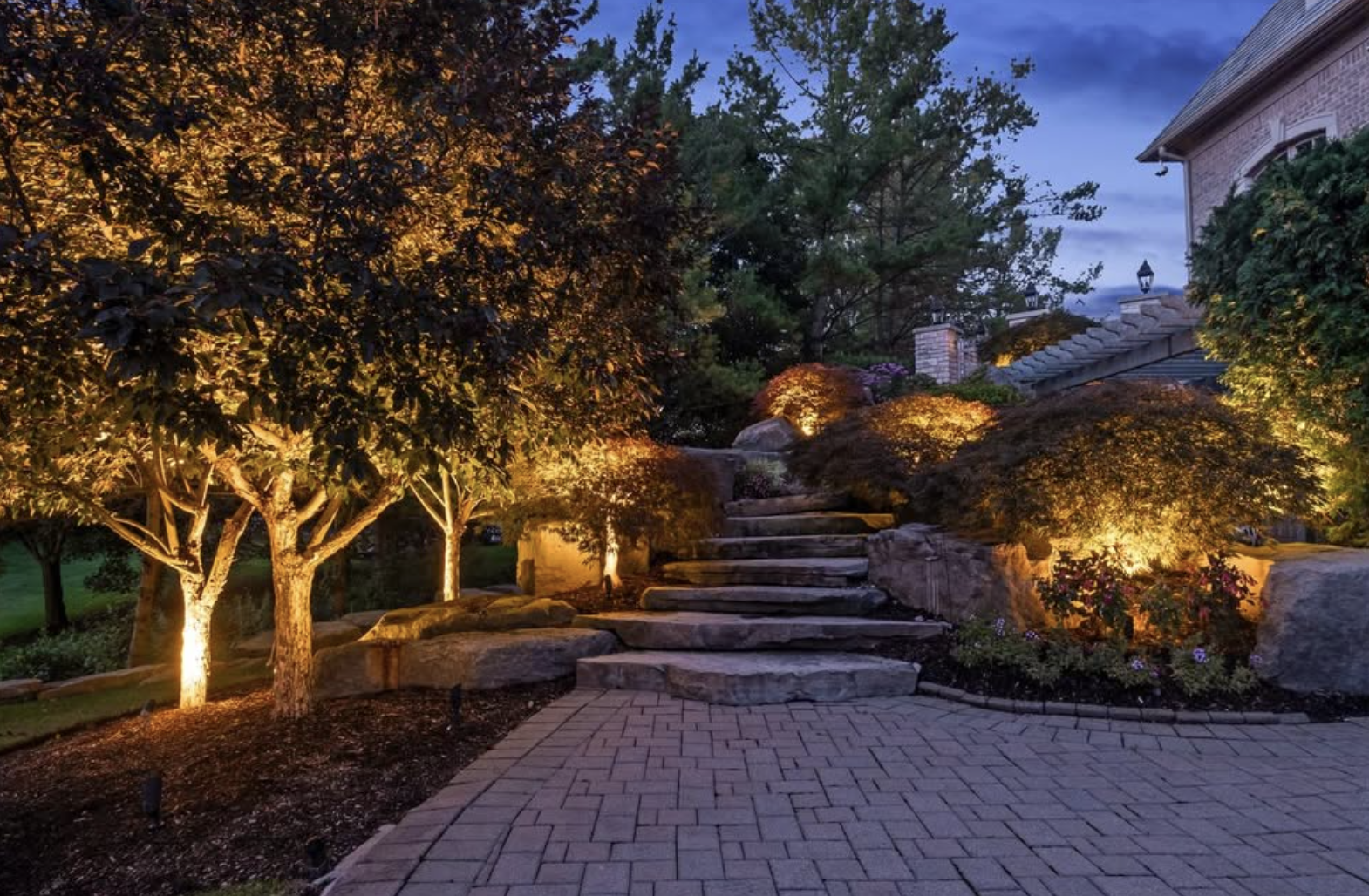
When homeowners imagine a new patio, garden or outdoor living space, they often picture how it will look during the day. They consider the layout, materials, plants, furniture and other details that bring the design together. But once the sun goes down, even a beautifully designed landscape can disappear without the right lighting.
Landscape lighting should be more than an afterthought. When it is incorporated into the design from the beginning, it can extend the use of your outdoor spaces, improve safety and reveal an entirely different side of your landscape.
Extend the Time You Can Enjoy Your Outdoor Space
Michigan summers are worth making the most of. Landscape lighting allows patios, outdoor kitchens, fire features and gathering areas to remain comfortable and usable well into the evening.
The goal is not to make the backyard feel as bright as an interior room. Effective outdoor lighting creates just enough illumination to move through the space comfortably, enjoy a meal or continue a conversation after sunset. It supports the way you want to use the space without taking away from the atmosphere.
As the days become shorter in late summer and fall, a well-designed lighting system also helps you continue enjoying your landscape later into the season.
Make Steps, Walkways and Changes in Grade Safer
Outdoor spaces often include steps, pathways, retaining walls and subtle changes in elevation. These features may be easy to navigate during the day but become difficult to see at night.
Low-level lighting can define walking surfaces and highlight potential hazards without overwhelming the landscape. Path lights, step lights and carefully positioned fixtures can help family members and guests move confidently from the driveway to the entrance or from the patio into the yard.
Good safety lighting should feel integrated into the landscape. It quietly guides people through the space rather than drawing attention to the fixtures themselves.
Highlight the Features That Give Your Landscape Character
Lighting can transform familiar landscape elements once the sun goes down. A mature tree, textured stone wall or architectural detail that blends into the background during the day can become a dramatic focal point at night.
Different techniques create different effects. Uplighting can emphasize the branching structure of a tree, while lighting from above can cast soft shadows that resemble natural moonlight. Grazing light across stone, brick or wood brings out texture and depth. A reflection on water can add movement and create a calm focal point.
The most successful lighting plans are selective. Not every tree, wall or planting bed needs to be illuminated. Choosing a few important features creates contrast and gives the landscape a stronger sense of depth.
Create Atmosphere Without Overlighting
More light does not necessarily mean better lighting. Excessively bright fixtures, visible bulbs and poorly aimed beams can create glare, flatten the landscape and make an outdoor space feel more like a parking lot than a retreat.
A thoughtful lighting design uses layers of soft, targeted light. The brightness and placement of each fixture are considered in relation to nearby windows, neighboring properties and the way the space will be experienced from inside and outside the home.
Warm light is often the most inviting choice for residential landscapes because it complements natural materials and creates a comfortable atmosphere. The finished result should feel effortless: you notice the beauty of the space, not the equipment creating the effect.
Plan Lighting Alongside the Landscape
Landscape lighting is most effective when it is planned as part of the complete outdoor environment. Coordinating it with the hardscape, planting and construction plans allows wiring and fixtures to be installed efficiently and discreetly.
Early planning also helps answer important questions:
Which outdoor areas will be used after dark?
Where is additional visibility needed for safety?
Which trees, architectural features or materials should be highlighted?
How will new plants change as they mature?
Where can fixtures be positioned so they remain subtle and accessible for maintenance?
When these decisions are made before construction and planting are complete, the lighting can be integrated without disturbing finished patios, lawns or planting beds later.
Design for Long-Term Performance
An outdoor lighting system must perform through Michigan rain, snow, freezing temperatures and changing seasons. Quality fixtures, secure connections and proper installation all contribute to a system that looks better and requires fewer repairs over time.
The landscape will also continue to evolve. Plants grow, trees fill out and the way light moves through the space changes. Fixtures may need occasional cleaning, repositioning or adjustment to maintain the original effect. Designing with maintenance in mind makes those updates easier.
Timers and automatic controls can simplify daily use by turning the system on at dusk and off at a scheduled time. Separate lighting zones can also provide flexibility, allowing you to illuminate a gathering space when it is in use while keeping other areas quieter.
See Your Landscape in a New Light
The best landscape lighting does more than brighten a yard. It extends your time outdoors, makes the property easier to navigate and highlights the details that make the landscape feel uniquely yours.
For more than 50 years, Robert Thomas Landscape Environments has helped Michigan homeowners create thoughtful, lasting outdoor spaces. By considering lighting as part of the complete landscape design, our team can create an environment that feels just as welcoming after sunset as it does during the day.
Ready to see your landscape in a new light? Book a phone consultation with Robert Thomas Landscape Environments to explore lighting solutions designed around your home and the way you live outdoors.
